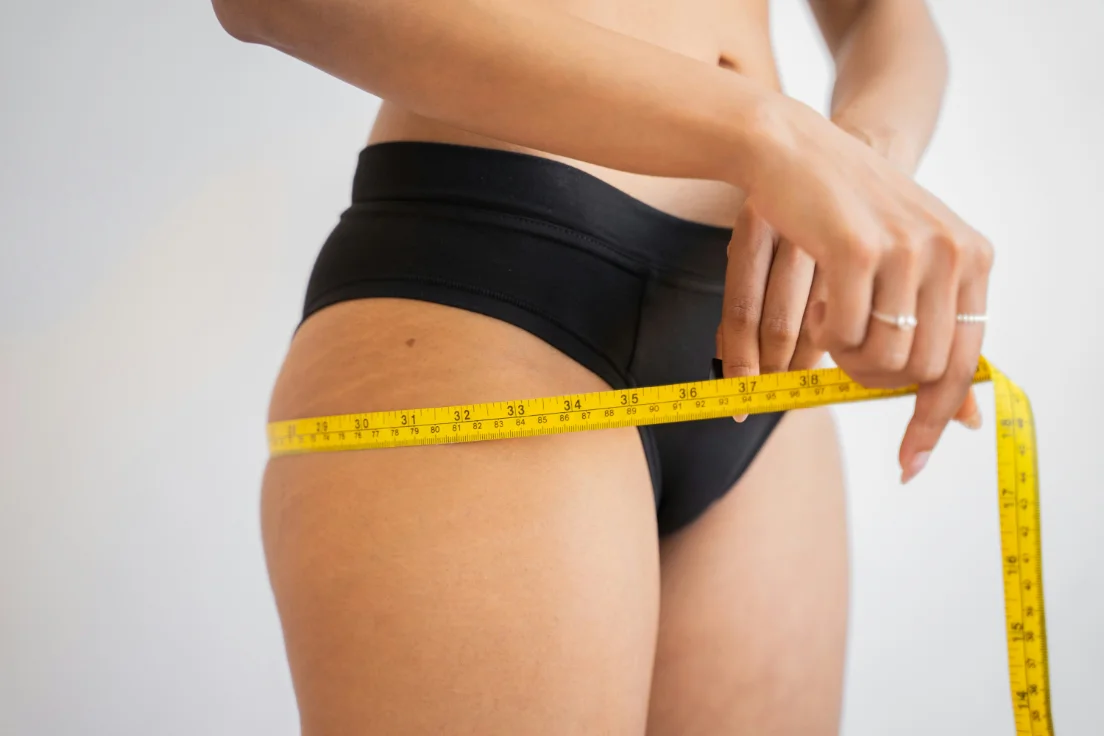



Somewhere in her forties, a woman who has managed her weight the same way for twenty years discovers that the method has stopped working. The diet that used to take off five pounds takes off nothing. The waistband changes before the scale does. And the advice on offer — eat less, move more, try harder — is the same advice that is already failing, delivered with the faint implication that the problem is discipline.
It is not discipline. Three separate things change at midlife, they change simultaneously, and each one blunts the strategies that used to work.
Why midlife is different
First, fat distribution shifts. Estrogen influences where the body stores fat, and as levels fall, storage moves from the hips and thighs toward the abdomen — including visceral fat packed around the organs. This is why many women find their shape changing while their weight holds steady, and why it is not a purely cosmetic concern: visceral fat is metabolically active and is more closely linked to cardiovascular and metabolic risk than fat stored elsewhere.
Second, muscle declines. From roughly the fourth decade onward, adults lose skeletal muscle steadily unless they actively work against it, and the loss accelerates through the menopausal transition. Muscle is metabolically expensive tissue, so less of it means a lower resting energy expenditure — the same intake now produces a surplus that it did not before.
Third, sleep breaks down. Night sweats and 3am waking are close to universal in this transition, and short or fragmented sleep reliably increases appetite, drives cravings toward fast carbohydrate, raises cortisol, and reduces the likelihood of training the next day. Sleep loss is not a side issue here. It is often the central one.
Add falling insulin sensitivity, and the picture is a body that responds differently to the same inputs. Nothing about that is a personal failing.
What hormone therapy does — and does not — do
Hormone therapy is not a weight loss treatment, and any clinic that markets it as one is overselling it. What the evidence broadly supports is more modest and still worth having: it may limit the abdominal redistribution that accompanies menopause, and by treating vasomotor symptoms it restores sleep, which removes one of the largest obstacles to everything else.
That indirect effect is easy to underrate. A woman sleeping through the night is a woman who can train consistently, who is not fighting cravings driven by sleep debt, and who has the capacity to sustain a plan. Treating the hot flashes is often the intervention that makes the weight plan viable — which is a different claim from treating the weight. Our hormone therapy page covers the options and candidacy in detail.
The muscle problem, which almost nobody mentions
If there is one thing to take from this article, it is this: protecting muscle is the central task of this decade.
Muscle sets your resting metabolic rate, governs glucose disposal, protects bone, and determines how you will function at eighty. It is also the tissue most readily lost during aggressive caloric restriction — which is precisely what many women reach for when the weight starts moving. A crash diet at fifty can leave someone lighter on the scale and metabolically worse off, with less muscle and a lower energy expenditure than before, which then makes regain almost inevitable.
The practical version:
- Resistance training two or three times a week, with progressive load. Not light weights for high repetitions — actual, increasing resistance. This is the highest-return habit available in midlife, by a wide margin.
- Protein at every meal. Most women in this transition eat considerably less than what supports muscle retention, and requirements rise with age rather than falling.
- Moderate the deficit. Slower loss preserves lean mass. Faster is not better here.
- Walk. Unglamorous, and among the most reliable contributors to daily energy expenditure.
- The goal in midlife is not the lowest possible number on the scale.
- It is the most muscle, the least visceral fat, and metabolic health you can carry into your sixties and seventies.
- Those goals sometimes point in different directions — and when they do, the second one wins.
Where GLP-1 medication fits
GLP-1 receptor agonists — semaglutide and tirzepatide among them — have genuinely changed what is achievable in weight management, and demand for them has grown accordingly. They work by slowing gastric emptying, improving insulin response, and acting on appetite regulation centrally. For the right candidate, the results are substantial and well documented.
Two things are worth being clear-eyed about, particularly at this stage of life.
They are not a substitute for the muscle work. A meaningful proportion of weight lost on these medications is lean mass. In a postmenopausal woman already losing muscle to age, that compounds a problem she can least afford. Resistance training and adequate protein are not optional accompaniments to GLP-1 therapy — they are what determines whether the outcome is good or merely lighter.
They do not address the hormonal picture. If sleep is broken by night sweats and the shape change is driven by falling estrogen, a GLP-1 alone leaves those untouched. The combination — treating symptoms, protecting muscle, and using medication where it is indicated — is what actually addresses the whole problem.
Broad eligibility is a BMI of 30 or above, or 27 and above with a weight-related condition. Whether it is right for you depends on your history, medications and goals. Our medical weight loss page covers the program, and the practicalities including cost are on the self-pay page.
Building an actual plan
A plan worth following addresses all of it in order:
- Fix sleep first. If night sweats are breaking your nights, treat them. Everything downstream gets easier.
- Rule out the mimics. Thyroid dysfunction, iron deficiency and insulin resistance all present as midlife weight gain and fatigue, and all are treatable in their own right. We check.
- Build the muscle foundation before, or alongside, any medication — not after.
- Look honestly at alcohol. It disrupts sleep, triggers hot flashes, and contributes calories that are easy to overlook.
- Add medication where it is indicated, with monitoring and with the lean-mass question addressed explicitly.
- Measure something other than weight — waist circumference, strength, how you sleep, how you feel at 4pm.
Care at Altavida
Most practices treat hormones and weight as separate problems handled by separate people. At midlife they are the same problem, and we treat them together — hormone evaluation and therapy, metabolic labs, GLP-1 programs* — carve-out service, see the Products & Services Disclaimer at the bottom of this page where appropriate, nutrition guidance, and body contouring for those who want it after the weight work is done.
If the last two years have felt like this, book a consultation or call 813-733-7300. We see women from Lutz, Wesley Chapel, New Tampa, Land O' Lakes and across Tampa Bay.
This article is for general education and is not a substitute for individual medical advice. Treatment decisions depend on your full history — please talk with your own provider.